How to brief your crew after a large livestock loss
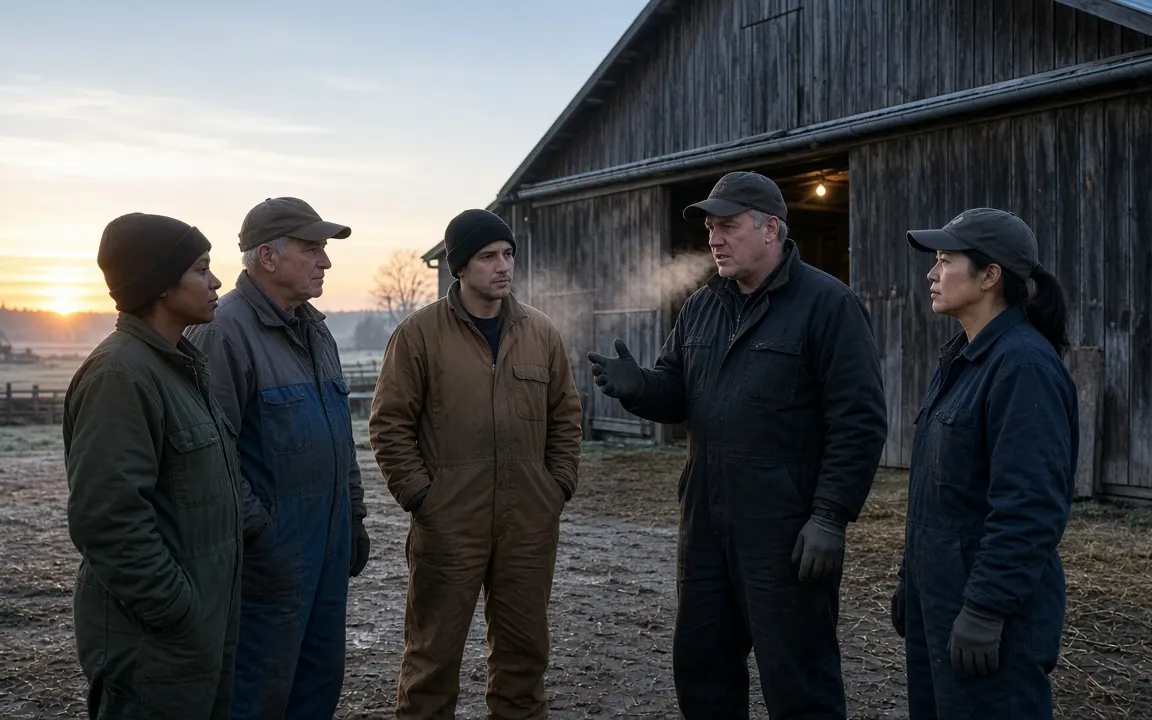
Get everyone together, give one clear instruction with one person in charge, cover safety and biosecurity before tasks, and check on people afterwards. Large losses are hard on crews: in pet-loss research, 66.9%[1] of people were surprised by how intense their grief was, and farm workers are not immune.
By the Livestock Cremation Services editorial team · Updated September 24, 2026 · 5 min read · Sources
- A ten-minute briefing structure you can reuse
- Safety, biosecurity and records in the right order
- How to support workers after a hard day
The short answer
Why does a formal briefing matter after a big loss?
After a fire, a ventilation failure, a storm or a disease depopulation, people want to help, and they start doing things. Somebody drags carcasses to the wrong spot. Somebody else posts photos. A third person tells a neighbor it was probably the feed. A short, structured briefing replaces all of that with one plan and one voice.
It also protects the crew. Moving dead animals is heavy, dirty and sometimes dangerous work, and a disease event adds protective gear and cleaning steps that people won't remember unless they're told. The briefing is where you slow things down just enough to do the work right.
This guide pairs with our mortality pre-planning guide. The plan says what should happen; the briefing is how you tell people on the day.
Ten minutes, standing up
What should the first briefing cover, and in what order?
- What happened, in facts only. "We lost about 60 finishers in Barn 2 overnight. The fans failed. We don't know more yet." No guesses about cause.
- Who's in charge. One name for decisions, one backup. Everyone else takes direction from them.
- Safety. Which equipment is used, who is trained on it, where not to stand. Heat, cold and fatigue limits.
- Biosecurity. Which areas are closed, what gear is required, where to change and wash, and which lanes the trucks use.
- Tasks. Who counts and photographs, who moves carcasses, who keeps the living animals fed and watered.
- Records. One person keeps the log of animals, times and instructions received.
- Communication. Nobody talks to media or posts online. Questions from neighbors go to the person in charge.
- Next update. A time for the next check-in, even if nothing has changed.

When officials are involved
What changes if it might be a reportable disease?
If the losses could be disease, the first instruction is usually: stop moving carcasses until the vet or state officials say how. Samples may be needed, and moving animals can spread the problem. Tell the crew plainly that doing nothing for an hour is the right thing, because people instinctively want to clean up.
Avian influenza gives a sense of scale. The US outbreak that began in 2022 has affected over 179 million birds[2], according to USDA's avian influenza epidemiology report. By our estimate, a single infected premises has averaged about 102,814 birds per premises[3], which tells you how long a depopulation crew may be on site. Many of the farms involved had crews working through depopulation and on-site composting under official direction. When that happens, the incident team's instructions override the farm's usual routine. Your briefing should say who on the farm talks to them, and that instructions from anyone else don't count.
- Confirm which protective equipment is required, and make sure there's enough before anyone starts.
- Keep a list of everyone who enters the affected area, including outside contractors.
- Separate crews who work with affected animals from those caring for healthy ones, if you can.
- Tell anyone who keeps birds or pigs at home what extra precautions to take.
If you lost a lot of animals at once, what would worry you most?
Tap an answer to vote and see how others answered. Anonymous.
Mixed messages
What should staff do when instructions conflict?
It will happen. The vet says one thing, the integrator's field rep another, the owner a third. Tell the crew in the first briefing: if you hear two different instructions, stop and ask the person in charge. Don't pick the one you like or the one you heard last.
The person in charge then gets one current version, writes it on the board and logs who gave it. Our mortality records guide explains why that written trail matters later, especially for indemnity or insurance claims.
Two instructions means stop and ask. It never means pick one.
The heavy part
How do you keep people safe while moving carcasses?
Adult cattle weigh well over half a ton, and even a finished hog is more than two people should lift. Crew injuries during cleanup are common and avoidable. Brief the basics every time, even with experienced hands:
- Use loaders, winches or slings, not backs. Only trained operators run equipment.
- Nobody stands between a machine and a carcass, or under a raised bucket.
- Bloated carcasses can rupture. Keep faces away and wear eye protection.
- Gloves on always; wash hands before eating, drinking or smoking.
- Rotate people through the hardest jobs and set rest breaks, especially in heat.
If the losses are heading to on-farm compost, make sure the people building the pile know the recipe and the layering. Our step-by-step composting guide is printable for exactly that. If the carcasses are being hauled, confirm where the truck stops and that the crew isn't loading beside healthy animals; our vendor interview guide covers the pickup-point question. The livestock mortality planner estimates how much carbon material the pile will need, and our services page covers the hauled routes.

Free tool
Livestock mortality planner
Plan disposal capacity and costs for farm losses, from one animal to a herd.
After the work
How do you look after the crew once it's over?
Farm people are expected to be tough about losses. But finding a barn full of dead animals you fed yesterday, or spending days euthanizing a healthy-looking flock, leaves a mark. Research on pet loss, such as the RSPCA's survey of bereaved owners, gives a sense of what grief does even in ordinary circumstances: 72.6%[4] of bereaved owners lost their daily routine or sense of purpose, and 92%[5] of those employed said it affected them at work. A mass loss on a farm is heavier, not lighter.
- Hold a short debrief a day or two later. Ask what went well and what to change, and let people say how it felt.
- Watch for workers who go quiet, stop eating, or can't sleep. Check in privately.
- Give time off where you can. In one UK survey, 28.4%[6] of bereaved pet owners couldn't take any, and it made things harder.
- Share the number for your employee assistance program, a local counselor or a farm crisis line. The free Tufts University pet loss support helpline is another option for anyone grieving an animal.
Our article on grief after losing livestock has more on farm grief, including how to talk with children who helped raise the animals. The planning hub has printable sheets for the briefing and the debrief.
Do you have a written plan for a big loss, like a blizzard, heat wave or disease outbreak?
Tap an answer to vote and see how others answered. Anonymous.
Doing it better next time
What should you change after the event?
Within a couple of weeks, sit down with the notes from the debrief and update the plan: contacts that didn't answer, equipment that was missing, a pickup point that flooded. Then run the next briefing from the updated version. If you found your disposal options were too thin, tell us your county and species and we'll email vendors you can add as backups. We don't operate trucks or plants ourselves; we find the people who do. Our locations pages show how disposal rules differ by state, and the reader poll results show what worries other producers most about a mass loss.

Reader polls
What would you choose?
Vote anonymously and see how other readers answered. The results are live counts from people who visit this site, so they show real opinions, not a scientific sample.
If you lost a lot of animals at once, what would worry you most?
Tap an answer to vote and see how others answered. Anonymous.
Do you have a written plan for a big loss, like a blizzard, heat wave or disease outbreak?
Tap an answer to vote and see how others answered. Anonymous.
What helped you most in the first weeks?
Tap an answer to vote and see how others answered. Anonymous.

Questions people ask
Who should lead the staff briefing after a mass livestock loss?
The person who will make disposal decisions for the rest of the event, usually the owner or farm manager. If officials are running a disease response, that person is the farm's single point of contact with them. Naming a backup matters too, because events often run past one person's shift.
Should farm workers talk to the media or post about a loss?
It's wise to ask staff not to. Early explanations are often wrong, and posts can cause trouble with neighbors, buyers or officials running a disease response. Tell the crew who will speak for the farm and ask them to direct questions there. Explain why, so it doesn't feel like a gag order.
What protective equipment do crews need when handling dead livestock?
At minimum, gloves, boots that can be cleaned or covers, and coveralls. Add eye protection for bloated carcasses and respirators if officials require them in a disease response, particularly with avian influenza. Have handwashing and a place to change set up before work starts, not afterwards.
Is it normal for farm workers to be upset after a large loss?
Yes. Stress, trouble sleeping, irritability and guilt are common after mass losses and depopulation work, even among experienced stock handlers. Most people recover with rest and support, but some don't. Check in individually over the following weeks and make support easy to reach without anyone having to ask in front of others.
How often should we repeat the briefing during a long event?
At each shift change and whenever instructions change. A two-minute update is enough if nothing new has happened. The point is that everyone hears the same current plan, including people who arrived late, contractors and anyone covering a shift for the first time.


Sources and our estimates
- [1] 66.9% of respondents were surprised by how intense their grief was after losing a pet. RSPCA — Pet Loss Survey Results, 2026.
- [2] As of September 30, 2025, the U.S. highly pathogenic avian influenza (HPAI) outbreak that began in February 2022 had hit all 50 states and Puerto Rico, infecting 1,741 premises and affecting over 179 million birds. USDA APHIS CEAH - Status and Epidemiologic Analyses of HPAI-affected Poultry Flocks, September 30, 2025 Interim Report, 2025.
- [3] Each HPAI-infected premises averaged about 102,814 affected birds (Feb 2022-Sep 2025). Our estimate: 179,000,000 / 1,741. How we calculate.
- [4] After losing a pet, 72.6% lost their daily routine or sense of purpose, 69.8% had trouble concentrating and 65.9% had sleep problems. RSPCA — Pet Loss Survey Results, 2026.
- [5] 92% of employed respondents said pet loss affected them at work. RSPCA — Pet Loss Survey Results, 2026.
- [6] 28.4% of RSPCA survey respondents could not take time off work after their pet died. RSPCA — Pet Loss Survey Results, 2026.
Get help lining up disposal after a big loss
Tell us what you need and where you are. We'll reply by email with clear options and prices so you can decide in your own time.