Questions to ask a dead-stock hauler about biosecurity and capacity
Ask where the truck has been that day, whether it ever enters your yard, how much it can take in a bad week and what it refuses. Mortality handling was among the most common fixes USDA auditors required after bird flu detections, so the answers matter.
By the Livestock Cremation Services editorial team · Updated September 24, 2026 · 5 min read · Sources
- Twelve questions for renderers, haulers and incinerators
- What a solid answer sounds like, and what doesn't
- Capacity checks for storms, heat and disease
The short answer
Why is the dead-stock truck a biosecurity risk?
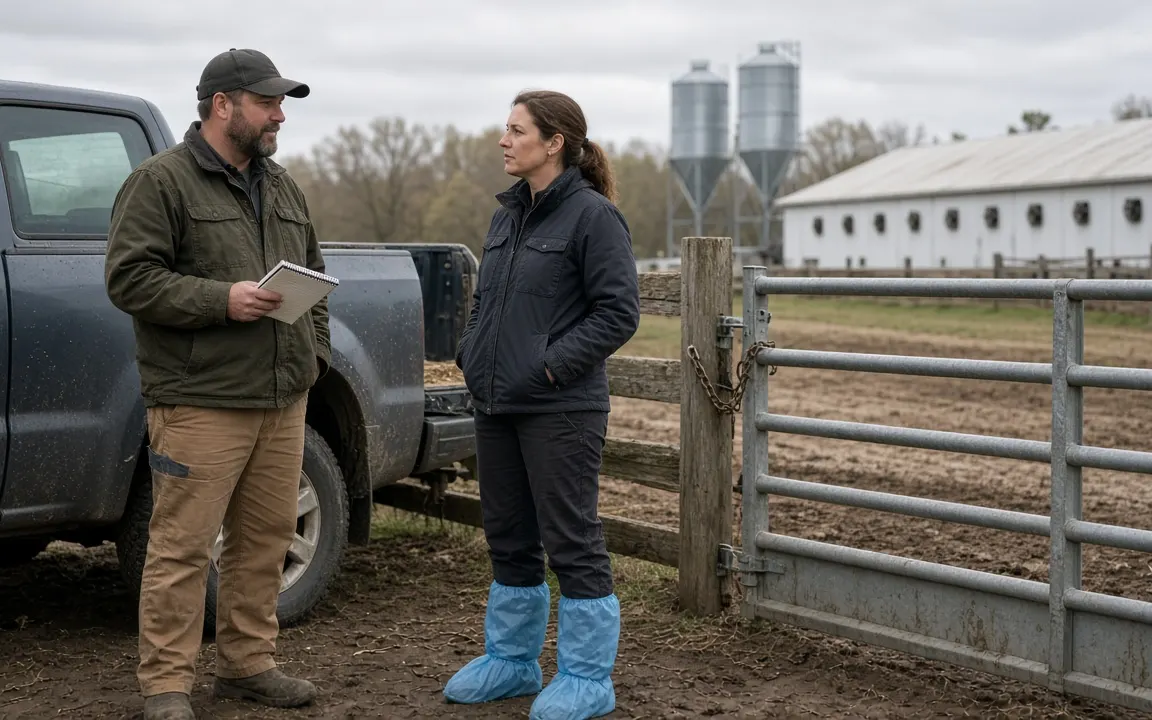
A carcass truck's job is to visit farms where animals have died, often several in a morning. Its tires, winch cable and driver's boots carry whatever was on the last yard. That doesn't make rendering a bad choice. It's still one of the cleanest ways to get a carcass off the farm. It means the pickup needs to happen at your edge, on your terms.
The bird flu years made this concrete. Of the 1,741 premises infected in the US outbreak through September 2025, 866 were commercial poultry operations[1], according to USDA's avian influenza epidemiology report. By our estimate, each infected premises averaged about 102,814 birds per premises[2], a lot of carcasses to move past one gate. When USDA audited farms after detections, the fixes it most often required involved dead-bird handling, wildlife access and visitor records[3]. Mortality is a door into the farm, and vendors are part of that door.
Keeping disease out
Which biosecurity questions should you ask first?
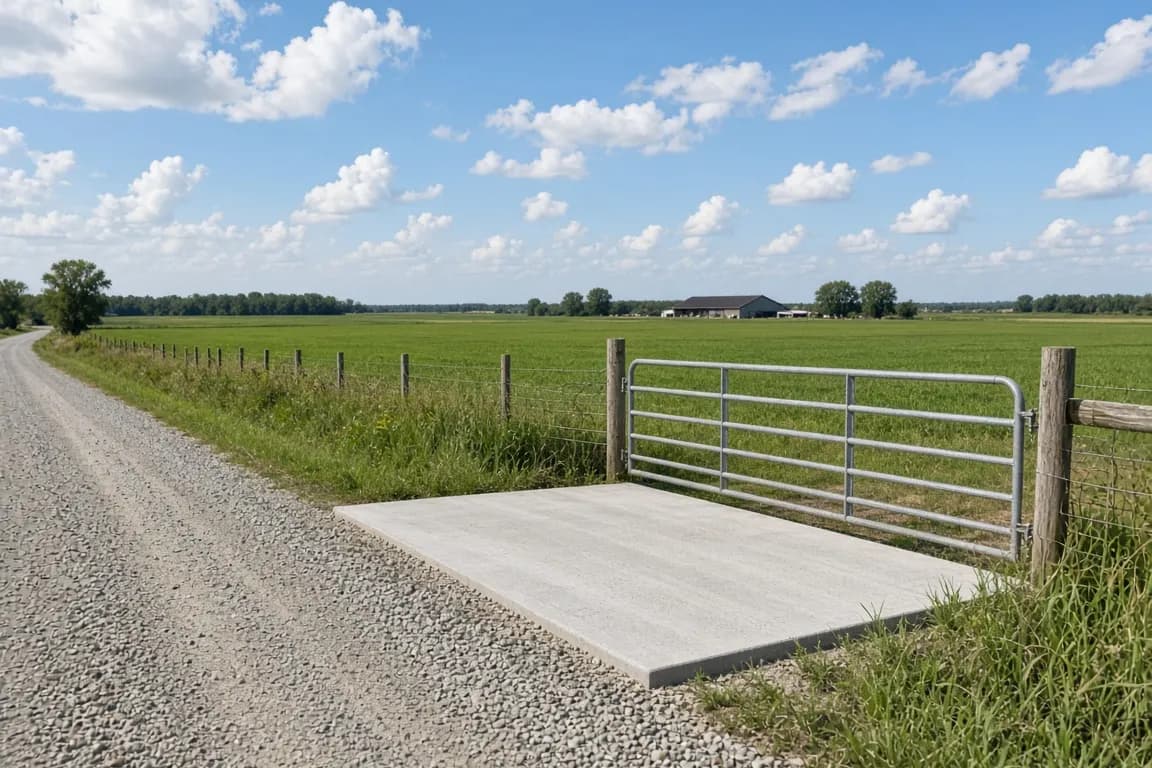
- Will your truck need to enter our yard, or can you load from a pad at the road? A solid answer is yes to the pad, with the reach or winch length to prove it.
- How many farms does the route visit before ours, and what species? A vendor that sequences clean sites first, or runs separate routes for poultry and swine, has thought about it.
- How are trucks and winch gear cleaned between routes? Listen for a routine: where, how often and with what. Vague reassurance is a warning sign.
- Will the driver ever step off the truck, and if so, in disposable boots? Some farms insist the driver stays in the cab.
- What changes when there's a disease outbreak in our area? Good vendors describe a written plan, not an improvised one.
- Do you pick up from farms under quarantine? If they do, ask how those loads are separated from routine stops.
The bad week
Can the vendor handle a big loss, and how fast?
Most vendors cope with a normal month. The question is what happens after a heat wave, a blizzard or a barn fire, when every farm in the county calls on the same morning. Rendering capacity has been shrinking for years: only about 50%[4] of US states still have a rendering plant, and many that remain have cut routes to small operations.
- What's your normal pickup window, and what did it stretch to during the last big weather event?
- How many head or pounds can you take from one farm in a day?
- What's the largest single animal your equipment can load?
- Do you have a backup plant, incinerator or landfill if your main plant is full?
- Will you still come in deep snow or mud, and what do you need from us to make that possible?
- Can you supply dead-stock bins or boxes, and how often are they swapped?
Can you still get a renderer to pick up at your farm?
Tap an answer to vote and see how others answered. Anonymous.
Even a candid "we fell three days behind in the February storm" is useful. It tells you how much holding and composting capacity you need on the farm to bridge the gap. Our barn and feedlot planning guide shows how to size that backup. If your area has already lost its truck, how to dispose of a dead cow lists the legal alternatives, and our reader poll results on renderer access show how common that is.
What they won't take
What will the vendor refuse, and why does that matter?
Every disposal route has exclusions, and you want to know them before you're standing next to a carcass the truck won't take. Common ones include:
- Drug-euthanized animals. Barbiturate residues can end up in rendered products, so some plants refuse them or charge more. Since 2003[5], euthanasia drug labels have carried an FDA warning about scavenging wildlife, as Cornell's disposal fact sheet explains.
- Older cattle. US feed rules to prevent BSE require extra handling of certain tissues from cattle over 30 months, and some renderers decline them.
- Suspected reportable disease. Most vendors won't touch these without official direction.
- Species. A plant that takes cattle may not take horses, sheep or goats, and a poultry route may not take mammals.
- Decomposed or frozen carcasses. Some routes set a time limit from death to pickup.
For each exclusion, your plan needs a second route. An incinerator or crematory is often the answer for drug-euthanized animals, while composting or burial may cover the rest where state rules allow. Our services comparison sets the routes side by side.
How the product is handled
What happens to the carcass after it leaves?
It's fair to ask where your animals end up. In a rendering plant, carcass material is cooked at 250 to 275°F in a batch that normally takes two to three hours[6], which destroys the common pathogens and separates fats from protein meal, according to USDA APHIS disposal guidance. Incinerators burn everything to ash. Compost operators build windrows that heat to pathogen-killing temperatures over weeks.
Ask which facility your loads go to, whether it's licensed by the state and what happens if it goes down. If the answer is a landfill, ask which one and whether it has agreed to accept carcasses. Some of the roughly 1,600[7] US solid-waste landfills take them by arrangement; many don't.
Cost and records
What should you ask about price and paperwork?
Per-pickup fees for a single large animal commonly run $75-$200[8] where a route exists, and contract pricing for volume customers is negotiated. Ask for every fee in writing: the base charge, mileage, winching, weekend or holiday calls, bin rental and fuel surcharges. Then ask what the ticket will show, because a ticket with a head count and weight is much more useful than a bare invoice.

Free tool
Horse aftercare cost comparison
Compare equine cremation, burial, rendering and composting side by side.
The large-animal cost comparison puts rendering, composting, burial and cremation side by side for one animal's weight, which gives you a benchmark before quotes arrive. Our mortality records guide explains how to match tickets against your own log.
Walk away if you hear this
What are the red flags in a vendor's answers?
- They can't say where the truck was earlier in the day.
- They insist on driving into the yard to the barn door every time.
- There's no written cleaning routine, or it's "whenever it's dirty".
- They won't state what they refuse until the truck arrives.
- Pricing is only verbal, or changes depending on who answers the phone.
- They have no plan for a plant shutdown or a local disease outbreak.
A vendor who answers biosecurity questions calmly and in detail has usually been asked them before.
If you're short on vendors to interview, tell us your county and species and we'll email the options we can find. We're an independent guide, not a hauler, so we're happy to point you at more than one. The locations directory also shows how access varies from state to state.

Reader polls
What would you choose?
Vote anonymously and see how other readers answered. The results are live counts from people who visit this site, so they show real opinions, not a scientific sample.
Can you still get a renderer to pick up at your farm?
Tap an answer to vote and see how others answered. Anonymous.
If you lost a lot of animals at once, what would worry you most?
Tap an answer to vote and see how others answered. Anonymous.
Did you (or would you) compare more than one provider?
Tap an answer to vote and see how others answered. Anonymous.


Questions people ask
Should the rendering truck come into my farmyard?
Ideally, no. A pickup pad or bin at the property edge, reachable from the public road, lets the truck load without crossing lanes your animals, feed trucks or staff use. If the truck must enter, set a single route, keep it away from animal housing and clean the path afterward.
Will a renderer pick up a cow that was put down by the vet?
Some will and some won't. Barbiturate euthanasia leaves drug residues that can carry into rendered products, so plants set their own policies. Always tell the vendor how the animal died. If they refuse, an incinerator, crematory, compost pile or approved burial site may be the legal alternative.
What happens if my renderer stops coming?
It happens more often than it used to as plants consolidate. Keep a priced second route in your plan, whether that's another hauler, an incinerator, on-farm composting or burial where it's allowed. Your county extension office and state department of agriculture usually know which options still serve your area.
Do dead-stock vendors need to be licensed?
In most US states, renderers and carcass haulers are licensed or registered with the state department of agriculture, and incinerators need an air permit. Requirements differ, so ask the vendor for their license number and which agency issued it. Legitimate operators share it without hesitation.
How do I keep scavengers off carcasses waiting for pickup?
Use a covered bin, a lidded dead-stock box or a tarp weighted at the edges, on a pad away from animal areas. Scavengers spread disease and can scatter remains onto neighbors' land. Carcass removal is itself a recognised predator control step: nearly one in five US cattle operations used nonlethal predator control methods in 2015.


Sources and our estimates
- [1] Of 1,741 HPAI-infected premises through September 2025, 687 were backyard non-poultry flocks, 187 backyard poultry and 866 commercial poultry premises (including 494 turkey and 143 table-egg operations). USDA APHIS CEAH - Status and Epidemiologic Analyses of HPAI-affected Poultry Flocks, September 30, 2025 Interim Report, 2025.
- [2] Each HPAI-infected premises averaged about 102,814 affected birds (Feb 2022-Sep 2025). Our estimate: 179,000,000 / 1,741. How we calculate.
- [3] USDA biosecurity audits after HPAI detections most commonly required fixes related to mortality management (dead-bird handling), wildlife access and visitor records. USDA APHIS CEAH - Status and Epidemiologic Analyses of HPAI-affected Poultry Flocks, September 30, 2025 Interim Report, 2025.
- [4] Only about 50% of U.S. states have rendering plants, most of them concentrated in the Midwest. Extension Horses (eXtension national Cooperative Extension) - Horse Disposal Options, 2019, 2019.
- [5] Since 2003 the FDA has required euthanasia drug labels to warn that euthanized animals must be disposed of by deep burial, incineration or another approved method to keep scavenging wildlife from eating the carcass. Cornell Waste Management Institute & Penn State - Horse Mortality: Carcass Disposal Alternatives (2012), 2003.
- [6] In rendering, carcass material is cooked at 250-275 F, a batch process that normally takes 2-3 hours and destroys harmful pathogens. USDA APHIS / Center for Food Security and Public Health (Iowa State) - Disposal: Composting, Rendering & Burial handout, based on NAHEMS Disposal Guidelines (2012), 2012.
- [7] About 1,600 solid-waste landfills operate in the U.S., and permitted landfills can be used for carcass disposal where accepted. USDA APHIS / Center for Food Security and Public Health (Iowa State) - Disposal: Composting, Rendering & Burial handout, based on NAHEMS Disposal Guidelines (2012), 2012.
- [8] Rendering companies typically charge a pickup fee of $75-$200 to remove a horse carcass, depending on location. Extension Horses (eXtension national Cooperative Extension) - Horse Disposal Options, 2019, 2019.
Find dead-stock vendors that serve your county
Tell us what you need and where you are. We'll reply by email with clear options and prices so you can decide in your own time.