How to dispose of a dead cow: your legal options, step by step
Call a renderer if one serves your area; otherwise compost it, bury it where your state allows, take it to a landfill that accepts carcasses, or have it cremated if you want the ashes. Most states expect it handled within 24-72 hours[1], so decide the route the same day.
By the Livestock Cremation Services editorial team · Updated September 24, 2026 · 5 min read · Sources
- Every legal route, with rough costs
- What to do in the first few hours
- When to call the vet before moving it
The short answer
What are the legal ways to get rid of a dead cow?
In most of the US there are five: rendering, on-farm composting, burial, a landfill that accepts carcasses, and incineration or cremation. Which ones you can actually use depends on your state, your soil, the season and whether anyone still runs a truck out your way. Leaving the carcass in a back pasture or a draw for the coyotes isn't one of them, and neither is open burning in most states.
You're far from alone in facing this. Nearly 3.88 million[2] US cattle and calves died of all causes in 2015, according to USDA's cattle and calf death-loss report. By our estimate, that works out to about 10,630 per day[3]. Every one of them had to go somewhere. The rest of this article takes the options in the order most people try them, with the catches for each.
Right now
What should you do in the first few hours?
- Decide whether the vet needs to see it. Sudden death with no obvious cause, several animals down, bleeding from body openings, staggering or odd behavior beforehand: call before moving anything. Anthrax, for example, is still found in some regions and the carcass must not be opened or dragged.
- Note the ear tag and the time. You'll want it for your records and possibly for insurance.
- Keep the herd away. Cattle are curious about a dead herdmate. If it's in a pen, move the others out; if it's in a pasture, consider a temporary fence.
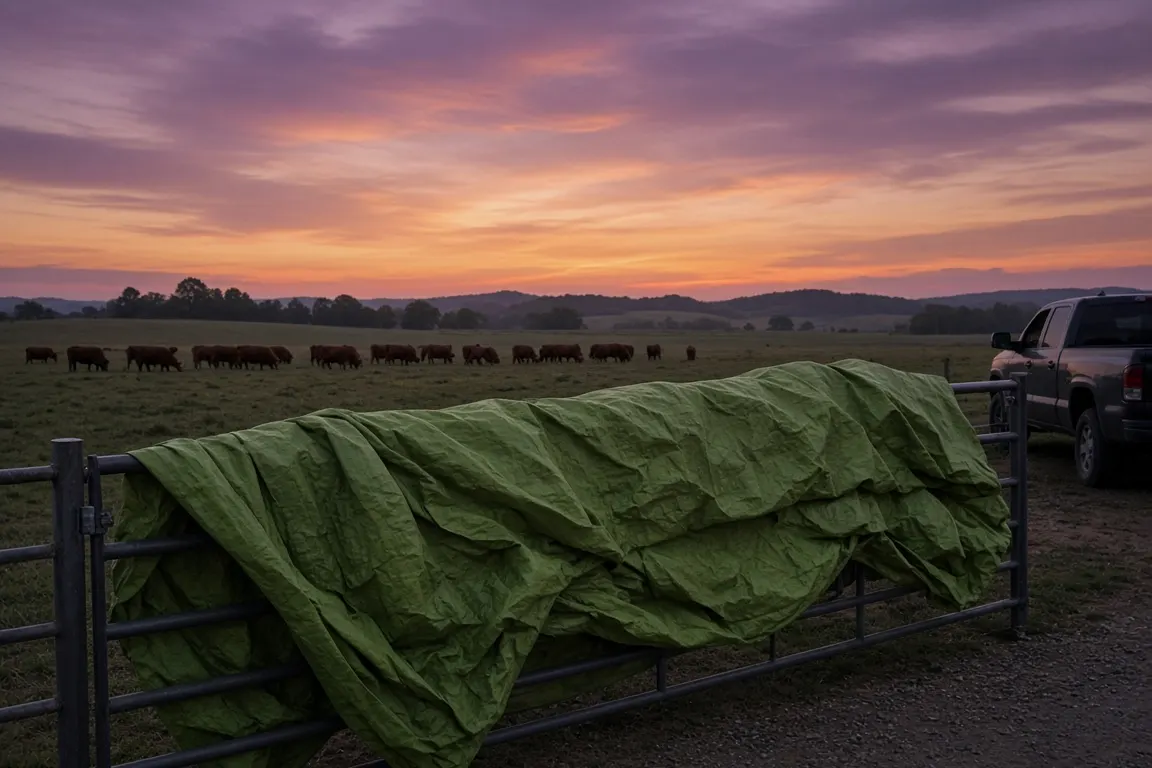
- Cover it. A heavy tarp with the edges weighted slows birds, dogs and coyotes.
- Pick the route before evening. Summer heat bloats a carcass within hours, and a bloated 1,300 lb cow is much harder to move.
Option one
Can a rendering company pick up a dead cow?
If one serves your area, rendering is usually the least work. A truck with a winch drags the carcass aboard and takes it to a plant where it's cooked into fat and protein meal. Horse owners are typically quoted $75-$200[4] per pickup, and cattle charges run in the same range, with extra for mileage, weekends or winching from a muddy spot.
The problem is access. Only about 50%[5] of US states still have a rendering plant, and plenty of routes have dropped small farms. Some renderers also limit older cattle because of BSE feed rules or turn away drug-euthanized animals. Call the number your neighbors use, and ask the questions in our dead-stock hauler interview guide. If the truck has stopped coming to you, you're not the only one; our reader poll results show how common that is.
Can you still get a renderer to pick up at your farm?
Tap an answer to vote and see how others answered. Anonymous.
Option two
Can you compost a dead cow on the farm?
Yes, in most states, and it's often the cheapest route in cash. You lay down a thick base of wood chips or sawdust, set the carcass on it, open the rumen so it doesn't bloat and blow the pile apart, and bury it under two feet of more carbon. Microbes heat the pile hot enough to kill most pathogens. Plan on roughly 10-12 cu yd per 1,000 lb[6] of carcass, which for an average beef cow means a couple of pickup loads of chips. The livestock mortality planner works out the exact volume for your animal.
It's slow for big animals. The second phase alone runs about 240 days[7] for a mature cow, and bones may still need to go back into a new pile. Some places don't allow it at all: California bans composting unprocessed cattle, sheep and goat carcasses, as UC Agriculture and Natural Resources explains. Our step-by-step composting guide covers the recipe, temperatures and common mistakes.

Free tool
Livestock mortality planner
Plan disposal capacity and costs for farm losses, from one animal to a herd.
Option three
Can you bury a dead cow on your own land?
Often, yes, with conditions. States set a minimum depth of cover, a distance from wells, streams and property lines, and a clearance above bedrock and the water table. Pennsylvania wants at least two feet of soil over the carcass and a 100-foot setback[8], according to Penn State Extension. Michigan requires burial within 24 hours and keeps pits 200 feet from any well[9]. A mature cow needs a hole roughly 6 to 8 feet deep so there's room for the cover.
If you don't own a backhoe, renting one or hiring an excavator typically costs $250-$500[10] for a single large animal. Burial is a poor fit for sandy soil, a high water table, flood ground or January frost, and you shouldn't bury an animal that may have died of a reportable disease unless officials say so. Our locations pages list the burial rules we've researched for each state.
Options four and five
What about a landfill, incineration or cremation?
Some landfills accept carcasses by arrangement, usually for a per-ton fee plus your own hauling. Call first: many want notice, some want a vet statement and some refuse whole cattle outright. Commercial incinerators burn everything, which suits deaths where disease is a concern, but they cost more per pound and are scarce.
Private cremation is the one route where you get the animal's own ashes back. It's what families choose for a show steer, a family milk cow or a pet cow that lived to twenty. It costs far more than the other options, in the high hundreds or more for a mature animal, and it needs a provider with equipment big enough. Our livestock cremation cost guide breaks down the quote.
Side by side
Which option should you pick for your situation?
| Your situation | Usually the first choice | Why |
|---|---|---|
| Renderer still serves your road | Rendering pickup | Least labor, carcass gone the same week |
| No renderer, plenty of wood chips and space | On-farm compost | Low cash cost, no hole to dig |
| Deep clay soil, backhoe on hand, far from water | Burial | Quick, done in an afternoon |
| Vet suspects disease | Whatever officials direct | Samples and containment come first |
| Family animal, you want to keep something | Private cremation | The only route that returns the ashes |
For a deeper look at the money, our comparison of rendering vs burial costs works through one cow on each route. Our services overview explains what each involves in more detail.
Before it happens again
How do you make the next one easier?
Adult cattle death loss runs at a couple of percent of inventory a year in the US, higher on dairies, so if you run cows you'll face this again. Write down which route you used, what it cost and who answered the phone. Price a backup. The pre-planning article for smaller farms takes about twenty minutes to work through.
If you're stuck today, tell us your county and the animal's weight. We're an independent guide, not a hauler, and we'll email the options we can find near you.
When an adult animal dies on your place, what usually happens to it?
Tap an answer to vote and see how others answered. Anonymous.

Reader polls
What would you choose?
Vote anonymously and see how other readers answered. The results are live counts from people who visit this site, so they show real opinions, not a scientific sample.
When an adult animal dies on your place, what usually happens to it?
Tap an answer to vote and see how others answered. Anonymous.
Can you still get a renderer to pick up at your farm?
Tap an answer to vote and see how others answered. Anonymous.
Did you (or would you) compare more than one provider?
Tap an answer to vote and see how others answered. Anonymous.


Questions people ask
How long can a dead cow stay in the field before it must be removed?
State rules commonly allow 24 to 72 hours, and some are stricter. Pennsylvania allows 48 hours and Michigan expects burial within 24. In practice, summer heat makes it urgent within a day. If you can't meet your state's deadline because of weather, call your state department of agriculture and note what you did.
Who do I call to pick up a dead cow?
Start with a rendering company or dead-stock hauler, since many ranchers still have one within reach. Your neighbors, sale barn, feed store or county extension office usually know who runs in your area. If nobody does, a local excavator can dig a burial pit, or a crematory can quote for private cremation.
How much does it cost to get rid of a dead cow?
Rendering pickup commonly runs about $75 to $200 where a route exists. Burial with a rented backhoe is around $250 to $500, and composting a large animal costs a few hundred dollars in materials and time. Private cremation, if you want ashes back, typically starts in the high hundreds for a mature animal.
Can I just leave a dead cow in the pasture?
In most states, no. Leaving a carcass to rot attracts predators, can contaminate water and breaks carcass disposal laws, especially if the animal was euthanized with drugs that can poison eagles and dogs. Some western states allow limited exceptions on very large rangeland, but check before you count on it.
Should I get a necropsy before disposing of a dead cow?
If the cause isn't obvious, or more than one animal has died, yes. A field necropsy by your vet or a trip to a state diagnostic lab can catch disease, toxic plants or feed problems before you lose more. Once a carcass is rendered or buried, that chance is gone.
Can a dead cow be cremated?
Yes, by providers with large-animal equipment. An agricultural cremation unit may hold up to about 1,500 lb in one load, so a mature cow is usually cremated alone. Expect to get back several dozen pounds of ashes, and ask for the full price including pickup before you agree.


Sources and our estimates
- [1] State rules commonly require dead animals to be buried within 24 to 72 hours of death, especially when euthanized. Cornell Waste Management Institute & Penn State - Horse Mortality: Carcass Disposal Alternatives (2012), 2012.
- [2] Almost 3.9 million U.S. cattle and calves died from all causes in 2015 (1.736 million adult cattle and 2.144 million calves). USDA APHIS NAHMS - Death Loss in U.S. Cattle and Calves Due to Predator and Nonpredator Causes, 2015 (published Dec 2017), 2015.
- [3] About 10,630 U.S. cattle and calves died every day in 2015. Our estimate: 3,880,000 / 365. How we calculate.
- [4] Rendering companies typically charge a pickup fee of $75-$200 to remove a horse carcass, depending on location. Extension Horses (eXtension national Cooperative Extension) - Horse Disposal Options, 2019, 2019.
- [5] Only about 50% of U.S. states have rendering plants, most of them concentrated in the Midwest. Extension Horses (eXtension national Cooperative Extension) - Horse Disposal Options, 2019, 2019.
- [6] Bovine composting may require 10-12 cubic yards of cover material per 1,000 lb of carcass. USDA APHIS / Center for Food Security and Public Health (Iowa State) - Disposal: Composting, Rendering & Burial handout, based on NAHEMS Disposal Guidelines (2012), 2012.
- [7] The second composting phase takes about 10 days for chickens but approximately 240 days for mature cows and horses. USDA APHIS / Center for Food Security and Public Health (Iowa State) - Disposal: Composting, Rendering & Burial handout, based on NAHEMS Disposal Guidelines (2012), 2012.
- [8] Pennsylvania on-farm burial requires at least 2 feet of soil cover, 2 feet of clearance above bedrock and the seasonal high water table, and at least 100 feet from wells, sinkholes, waters and property lines (200 feet recommended). Penn State Extension - Livestock and Poultry Mortality Disposal in Pennsylvania (J. Craig Williams, updated Oct 2025), 2025.
- [9] Michigan requires dead animals to be buried within 24 hours, at least 2 feet deep and not within 200 feet of a well, with no more than 100 burial sites or 10,000 lb of animals per acre. Michigan Farm News (Michigan Farm Bureau) - MDARD reminder: Animal burial options, 2024.
- [10] Renting a backhoe to bury a horse costs roughly $250-$500, and horse disposal in a landfill (where accepted) costs about $80-$150. Extension Horses (eXtension national Cooperative Extension) - Horse Disposal Options, 2019, 2019.
Find someone to handle a dead cow near you
Tell us what you need and where you are. We'll reply by email with clear options and prices so you can decide in your own time.