How to move a dead cow or other large farm animal
Use a loader, winch or skid steer rather than muscle, move the animal to firm ground a truck can reach, keep it cool and covered, and book collection fast: many states allow only 24-72 hours[1]. A 1,300 lb animal is a machinery job, not a people job.
By the Livestock Cremation Services editorial team · Updated September 24, 2026 · 4 min read · Sources
- Equipment that makes loading safe
- Access, weather and timing checklists
- What haulers and crematories need from you
The short answer
What's the safest way to move a dead large animal?
With a machine, and only as far as you need to. A tractor with a front-end loader, a skid steer, or a hauler's winch will move a cow or steer without anyone getting hurt. People trying to drag or lift a large animal by hand are how backs, knees and hands get injured. For lambs, goats and pigs under about 150 lb, two people with a sled, tarp or stretcher can manage.
Move the animal only to a spot where the truck can reach it on firm ground, near a gate if possible. If a renderer or crematory is collecting, ask them where they'd like it; many prefer to winch from where the animal lies rather than have it dragged across a yard.
The right tools
What equipment do you need to load a dead cow?
| Animal | Typical weight | Usual equipment |
|---|---|---|
| Lamb, kid goat, piglet | Under 80 lb | Two people, a tarp or sled |
| Ewe, adult goat, pet pig | 80 to 200 lb | Sled, stretcher or small loader bucket |
| Show or market hog, calf | 200 to 600 lb | Skid steer, loader, or a winch on a trailer |
| Cow, steer, bull | 1,000 to 2,000+ lb | Loader with forks or chains, or a hauler's winch and tilt deck |
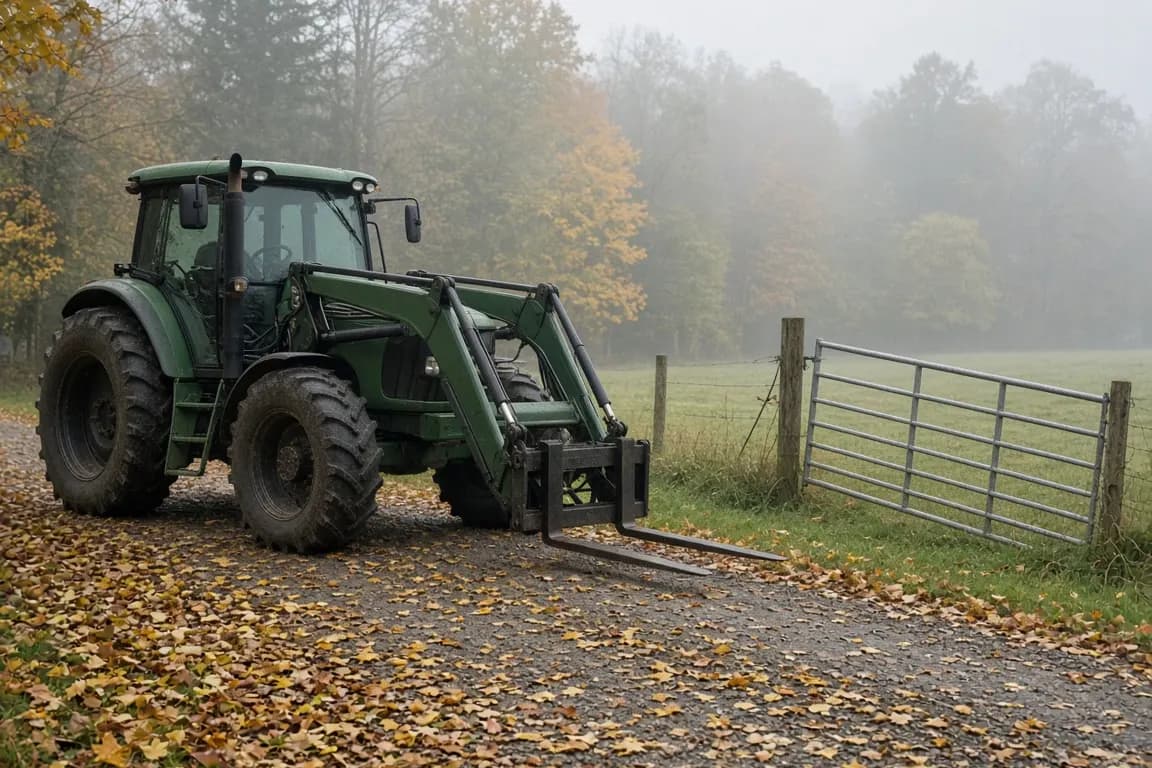
Use wide straps or a chain wrapped around the body behind the front legs, not a rope around the neck or a single leg, which can tear. Slide a tarp under the animal first if the provider will winch it; it keeps the body intact and cleaner. If you don't own a loader, a neighbor usually does, and most farm neighbors will come.
Getting the truck in
How do you make sure the truck can reach the animal?
- Gate width. Most trucks and trailers need 12 feet or more. Measure the one you'll use.
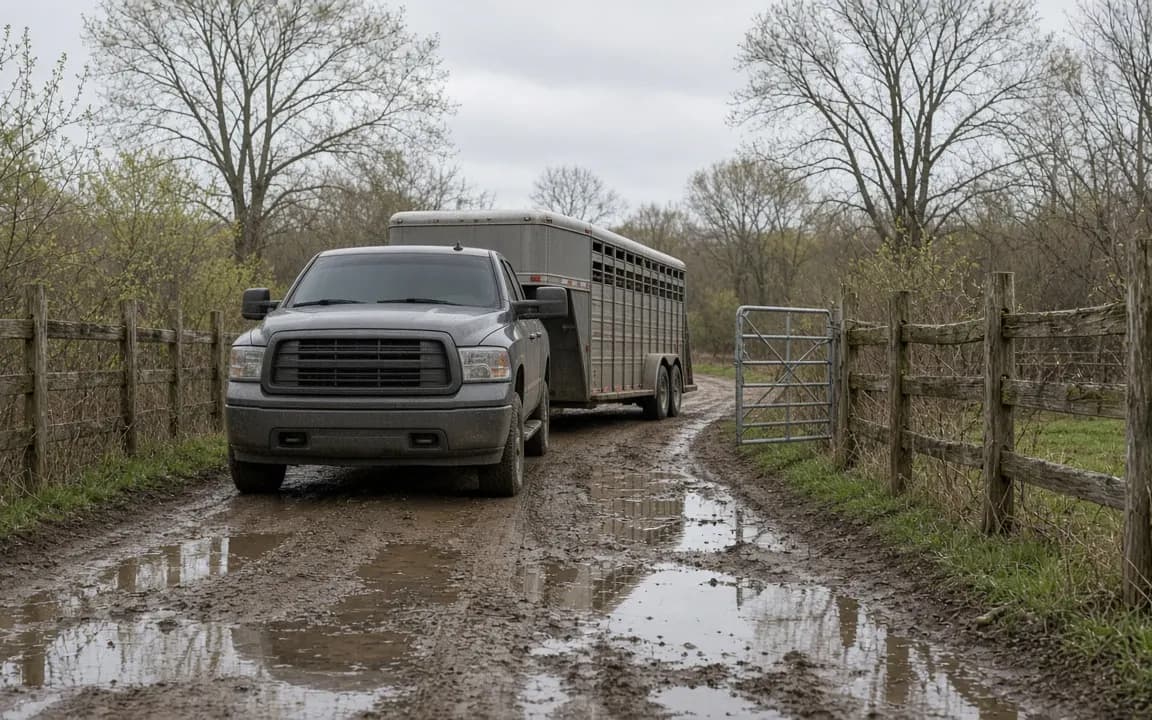
- Ground. Wet pasture, spring thaw and irrigated fields can trap a loaded truck. If needed, move the animal to gravel or a lane.
- Overhead. Low branches, wires and barn eaves can block a winch arm or tilt deck.
- Turning room. Trailers need space to turn around; say so if they'll have to back in.
- Distance from animals. Keep the pickup point away from pens, water troughs and feed, for biosecurity.
Our biosecurity and capacity interview guide explains why a pickup point at the road is worth setting up if you lose animals regularly. Whether a truck still comes at all is one of our reader poll questions, and the results update as votes arrive.
The clock
How quickly does a dead animal need to be moved?
Faster than people expect. State rules commonly allow 24-72 hours[1], according to Cornell's disposal fact sheet, and some are stricter: Pennsylvania allows 48 hours[2], and several California counties set 24 or 48 hours[3]. In the UK, under GOV.UK's fallen stock rules, fallen stock that needs BSE testing must be reported to a collector within 24 hours and delivered to a sampling site within 72[4]. Our locations pages list the deadlines we've found for each state.
Heat is the practical limit. A large ruminant bloats within hours on a hot day, which makes it heavier to move, harder to load and unpleasant for everyone. In winter, a carcass may freeze to the ground, so move it onto a tarp or pallet early if collection is a day away.
- Move the animal into shade or a cool barn aisle if you can do it safely.
- Cover it with a tarp weighted at the edges to keep scavengers off.
- Don't wrap it in plastic in hot weather; it traps heat.
- Book collection the same day, and note the time of death for the provider.
Can you still get a renderer to pick up at your farm?
Tap an answer to vote and see how others answered. Anonymous.
Doing it yourself
Can you haul a dead animal to a crematory or landfill yourself?
Often, yes, and it can save the collection fee. You'll need a trailer that can take the weight, a way to load and unload, and a tarp to cover the animal on the road. Call the destination first: ask where to unload, whether they have equipment to take the animal off your trailer, and what hours they receive.
Some states require that dead animals be covered or in a leak-proof container when transported on public roads, and some restrict moving carcasses across county or state lines during a disease outbreak. If the animal was euthanized with drugs, tell the receiving facility; since 2003[5], the FDA has required euthanasia drug labels to warn about proper disposal. The cremation cost calculator shows how much a collection fee adds, so you can judge whether hauling it yourself is worth the effort.

Free tool
Cremation cost calculator
Estimate a realistic price range for your pet's size, location and the type of cremation.
For private cremation
What does a crematory need from you on collection day?
Large-animal crematories schedule around their chamber. By our calculation, a 1,100 lb animal needs at least 4.4 hours[6] of burn time, so they can usually take only one or two big animals a day. Tell them the species and weight, where the animal is, and what equipment you have on hand. Ask if they'll bring a winch trailer or need your loader.
- Take any keepsakes first: halter, ear tag, tail hair, hoof print.
- Have someone there who can operate a loader if needed.
- Decide whether the family wants to say goodbye before the truck arrives.
- Confirm the written price, including pickup, before the animal is loaded.
Our article on what happens during livestock cremation explains the process after collection, and the cremation cost guide shows how pickup fees work. For a show animal, see what to do when a show animal dies.
Ten minutes checking the gate and the ground saves an hour of pulling a stuck truck out of the mud.
If you need someone who can reach your place with the right equipment, send us the details. We don't run trucks ourselves, but we'll email you providers who do. Our services page lists every route.

Reader polls
What would you choose?
Vote anonymously and see how other readers answered. The results are live counts from people who visit this site, so they show real opinions, not a scientific sample.
Can you still get a renderer to pick up at your farm?
Tap an answer to vote and see how others answered. Anonymous.
When an adult animal dies on your place, what usually happens to it?
Tap an answer to vote and see how others answered. Anonymous.
Did you (or would you) compare more than one provider?
Tap an answer to vote and see how others answered. Anonymous.


Questions people ask
How do you move a dead cow without a tractor?
Call a renderer, dead-stock hauler or large-animal crematory with a winch truck; they'll load it from where it lies. A neighbor with a tractor and loader is another option. Don't try to move a mature cow by hand or with a pickup and rope, which risks injury and damages the carcass.
Can I put a dead calf or sheep in my pickup truck?
Usually, yes, for small animals, as long as it's covered with a tarp and doesn't leak onto the road. Some states require carcasses to be covered or in leak-proof containers in transit. Call the receiving crematory, landfill or renderer first to confirm they'll accept it and where to unload.
What if the dead animal is somewhere a truck can't reach?
Move it to the nearest firm ground with a tractor, skid steer or ATV and sled, taking care not to drag it through water or across other pastures. In deep snow or mud, you may need to wait, cover the animal and tell your provider or state agency why collection is delayed.
Do I need a permit to transport a dead animal?
For your own animal going to a licensed facility, usually not, but rules vary. During disease outbreaks, officials may restrict moving carcasses off the farm or across county and state lines. If the animal may have died of a reportable disease, don't move it at all until a veterinarian or state official advises.
How do you keep a dead animal cool until collection?
Move it into shade or a cool barn if you can, cover it with a light-colored tarp weighted at the edges, and avoid wrapping it in plastic in warm weather. Small animals can go in a cold room or chest freezer. For large animals, the only real answer in summer is fast collection.


Sources and our estimates
- [1] State rules commonly require dead animals to be buried within 24 to 72 hours of death, especially when euthanized. Cornell Waste Management Institute & Penn State - Horse Mortality: Carcass Disposal Alternatives (2012), 2012.
- [2] Pennsylvania requires a dead domestic animal to be properly disposed of within 48 hours of death. Penn State Extension - Livestock and Poultry Mortality Disposal in Pennsylvania (J. Craig Williams, updated Oct 2025), 2025.
- [3] Several California counties give owners 24 or 48 hours to dispose of a dead animal before penalties apply. UC Cooperative Extension (Schohr, Lile, Snell) - Livestock Carcass Management, UC ANR 2021, 2021.
- [4] In the UK, when fallen stock needs BSE testing, the collector must be contacted within 24 hours of death and the animal delivered to an approved sampling site within 72 hours. GOV.UK (Defra/APHA) - Fallen stock guidance, 2024.
- [5] Since 2003 the FDA has required euthanasia drug labels to warn that euthanized animals must be disposed of by deep burial, incineration or another approved method to keep scavenging wildlife from eating the carcass. Cornell Waste Management Institute & Penn State - Horse Mortality: Carcass Disposal Alternatives (2012), 2003.
- [6] At an average rate of 250 lb per hour, the burn phase for a 1,100 lb horse would take at least about 4.4 hours, not counting preheating and cool-down. Our estimate: 1,100 lb / 250 lb per hour. How we calculate.
Find a hauler or crematory that collects
Tell us what you need and where you are. We'll reply by email with clear options and prices so you can decide in your own time.