Rendering, composting or cremation in Dusseldorf
Whether it's a feedlot loss, a ewe in lambing season or a 4-H steer your family raised, this page explains the realistic options in Dusseldorf and how to get a written price.
- Costs per head for every route
- Burial and composting rules in plain English
- Private cremation for show and family animals

Dusseldorf, North Rhine-Westphalia
Farm, fairground and backyard: the Dusseldorf picture
Düsseldorf itself has only a handful of large animals, mostly at riding stables, city farms and wildlife enclosures on its edges, but the flat Lower Rhine pastureland to the north and west holds dairy cattle, sheep, pigs and horses on farms around Neuss, Meerbusch and beyond. When a large animal dies, German rules normally send fallen stock to a rendering plant, while individual cremation with ashes returned is a separate, privately arranged choice.
Lower Rhine pastures are low and often waterlogged in winter, and stable yards around Düsseldorf can be tight for a heavy vehicle. Whoever collects the animal will ask what it weighs, how wide the gate is and whether a lifting truck can reach it without sinking into the meadow. Knowing this in advance saves time and upset when collection is needed.
At the edge of Dusseldorf, subdivisions meet hay fields. Hobby farms with a few steers, a pair of pigs or a small sheep flock sit close to neighbors, which changes the options. Burying a 1,200 lb animal needs a backhoe and a site away from wells and property lines, and a compost pile in sight of new houses can draw complaints even where it's legal. Many fringe owners end up using a renderer or a private cremation for that reason alone.
Dusseldorf's population is around 619,000, the 2nd-largest of the 6 North Rhine-Westphalia communities we cover.
Our pages for Essen (19 miles), Cologne (22 miles) and Dortmund (36 miles) describe the same choices from those towns' point of view, and the providers overlap, so a quote from one often covers Dusseldorf as well.
76.0%[1]
In 2023, 76.0% of deaths in Germany were cremated (164 crematoria).
$600-$1,000[2]
Cremating a 1,000-pound horse was reported to cost about $600-$1,000, depending on location and the price of propane.
3-5% of body weight[3]
Embrace notes cremated remains typically weigh about 3-5% of the pet's original body weight.
None of the figures on this this page are ours alone: they rest on Embrace Pet Insurance and Extension Horses (eXtension national Cooperative Extension).
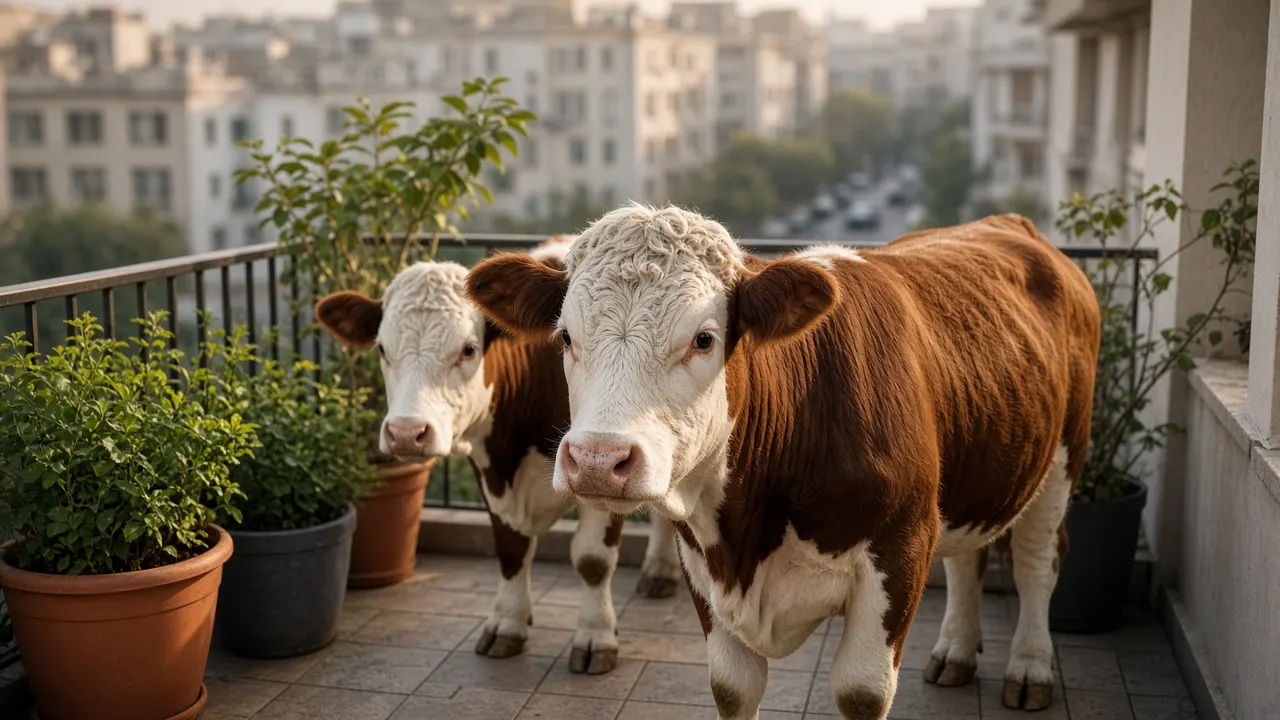
Burial, cremation and farm tradition in Germany
Where cremation is as ordinary as it is in Germany, at roughly 76.0%[1] of deaths, some families assume any animal can be cremated nearby. For livestock that's rarely so. Pet crematories may stop at a large dog or a goat, and only a few providers have a chamber big enough for a mature cow. If you'd want a heifer's or a boar's ashes back, find that provider first, before a well-meaning neighbor calls the usual collector.
The Germany percentage above is from Cremation Society of Great Britain, International Cremation Statistics 2023 (2023) and refers to human funerals. Treat it as context for Dusseldorf, not as a count of pets.
What the seasons mean for dead stock in Dusseldorf
Heat waves and hard winters both cause losses on their own, and both make disposal harder at the same moment. Whatever the climate near Dusseldorf, a short written plan, with who you'd call, where carcasses could go and what equipment you'd need, is the single most useful thing you can prepare.

Where the money goes when stock die near Dusseldorf
Across the EU, fallen stock is covered by animal by-product rules, and in most countries carcasses must go to an approved collector or processing plant rather than being buried on the farm. Who pays varies: in some countries a public fund or a levy covers part of the collection cost. The table shows how the routes compare rather than local prices, which you'll get from the collector serving Dusseldorf.
We keep the detailed North Rhine-Westphalia price table on one page so it stays current: see North Rhine-Westphalia prices.

Free tool
Livestock mortality planner
Plan disposal capacity and costs for farm losses, from one animal to a herd.
Before you dig or build a pile in North Rhine-Westphalia
A useful habit for anyone keeping livestock in North Rhine-Westphalia: look up the disposal rules once, on a calm day, and write the key numbers on the barn wall. Deadline in hours, minimum burial depth, well setback, and whether composting is allowed for your species. When a loss happens at night or in a storm, you won't be searching for them on a phone.
In Germany, fallen stock must go to the licensed rendering plant (Tierkörperbeseitigungsanstalt) that serves your district, and burying farm animals on the farm isn't permitted. In many federal states the animal disease fund (Tierseuchenkasse) covers part of the collection cost for registered animals. Individual cremation of a pet pig or show animal is arranged separately with a Tierkrematorium.
A calm checklist for Dusseldorf farms and families
- Stop and look before anyone moves the animal. If it died without warning, if more than one is down, or if you see a nosebleed or strange nervous-system signs, ring the vet before you touch anything. Samples for a lab could be needed.
- Move it away from water and the herd with a loader or winch, but only where that can be done without risk. Creek banks and the area around the well head are places to avoid.
- Cover it with a tarp weighted at the edges to keep birds, dogs and coyotes off, especially if the animal was euthanized with drugs.
- Decide whether anyone wants ashes back. If so, call a crematory that can handle the weight before any dead-stock pickup is booked.
- Choose the route: renderer, compost pile, burial, landfill or crematory, based on what's legal and available this week.
- Get the price in writing, including mileage, loading equipment and any weekend charge.
- Keep a record of the date, animal ID and method, for your herd records or an insurance claim.
Remembering a show or family animal
Around Düsseldorf, many large animals are companions rather than working stock: school ponies, a pair of pet goats, a rescued pig at a small sanctuary. If the standard rendering route feels wrong for your animal, talk to your yard and your vet before the animal is old or ill: whether a farewell can happen on site, who would be called, and roughly what individual cremation costs. Planning ahead turns a crisis into a set of steps.
or see how other readers answered in our polls, run the numbers with the free planning tools, The services page is the place to compare what is included, read our guides and latest articles. More local pages: Dortmund, Essen, Munster and Cologne, the North Rhine-Westphalia overview and every city in Germany.

Reader polls
What would you choose?
Vote anonymously and see how other readers answered. The results are live counts from people who visit this site, so they show real opinions, not a scientific sample.
Do you have a written plan for a big loss, like a blizzard, heat wave or disease outbreak?
Tap an answer to vote and see how others answered. Anonymous.
When an adult animal dies on your place, what usually happens to it?
Tap an answer to vote and see how others answered. Anonymous.
If you had to decide today, which aftercare would you choose for your pet?
Tap an answer to vote and see how others answered. Anonymous.

Free tools to help you plan
Livestock mortality planner
Plan disposal capacity and costs for farm losses, from one animal to a herd.

Urn size calculator
Find the urn volume you need from your pet's weight, plus keepsake and sharing options.

Horse aftercare cost comparison
Compare equine cremation, burial, rendering and composting side by side.
Questions people ask
Is cremation common in Germany?
For people, yes: about 76.0%[1] of Germany deaths end in cremation, according to Cremation Society of Great Britain, International Cremation Statistics 2023 (2023). Nobody publishes the same figure for pets, but in our experience pet choices in Dusseldorf follow the human pattern closely, so cremation is the default most families here start from.
Can a provider from a neighbouring town collect from Dusseldorf?
Usually yes. Essen is about 19 miles away, Cologne is about 22 miles away and Dortmund is about 36 miles away, all inside a normal collection radius. Get the mileage written into the quote so there is no surprise on the day.
Can meat from an animal that died on the farm be eaten?
No. An animal that died on its own, or was put down with euthanasia drugs, must not go into the food chain or be fed to dogs. Drug residues can poison pets and wildlife, and the cause of death may be a disease. Only animals killed at an inspected processor, or under your local home-kill rules while healthy, are fit to eat. Treat any dead stock as a carcass to dispose of, not as meat.
I live in Dusseldorf but own farmland elsewhere. Which rules apply?
The rules where the land is. Burial depth, setbacks, composting permissions and disposal deadlines follow the location of the carcass, not your home address in Dusseldorf. Agree a plan with whoever checks the stock: who calls the renderer or excavator, who pays and where a carcass can be moved and covered until it's collected.
Will a renderer take an animal that was euthanized with drugs?
Not always. Some renderers refuse drug-euthanized animals because of residues, and since 2003[5] FDA-required labels have warned that such carcasses must be kept away from scavengers. Tell whoever collects exactly how the animal died. If the renderer won't take it, deep burial, composting under full cover, incineration or cremation are the usual alternatives.
How long does it take to get a cow's or steer's ashes back?
It depends on the provider's schedule and distance more than the cremation itself. At a typical burn rate, the burn phase for an 1,100 lb animal takes at least 4.4 hours[6], then the chamber has to cool and the remains are processed and packed. Pickup scheduling, travel and any backlog add days, so ask for the provider's usual timeline and whether you collect the ashes or they deliver them.


Sources and our estimates
- [1] In 2023, 76.0% of deaths in Germany were cremated (164 crematoria). Cremation Society of Great Britain, International Cremation Statistics 2023, 2023.
- [2] Cremating a 1,000-pound horse was reported to cost about $600-$1,000, depending on location and the price of propane. Extension Horses (eXtension national Cooperative Extension) - Horse Disposal Options, 2019, 2019.
- [3] Embrace notes cremated remains typically weigh about 3-5% of the pet's original body weight. Embrace Pet Insurance - Bury or Cremate Your Dog? Costs, Pros & Cons, 2025.
- [4] Texas lost about 1,452 cattle and calves per day in 2015. Our estimate: (310,000 + 220,000) / 365. How we calculate.
- [5] Since 2003 the FDA has required euthanasia drug labels to warn that euthanized animals must be disposed of by deep burial, incineration or another approved method to keep scavenging wildlife from eating the carcass. Cornell Waste Management Institute & Penn State - Horse Mortality: Carcass Disposal Alternatives (2012), 2003.
- [6] At an average rate of 250 lb per hour, the burn phase for a 1,100 lb horse would take at least about 4.4 hours, not counting preheating and cool-down. Our estimate: 1,100 lb / 250 lb per hour. How we calculate.
Ask about a show animal's cremation
Tell us what you need and where you are. We'll reply by email with clear options and prices so you can decide in your own time.